The IRS just announced significant changes to Roth IRA contribution limits for 2026, and if you’re serious about building wealth for retirement, you need to understand these updates right now. Whether you’re a dividend investor building passive income or just starting your retirement journey, these new limits create powerful opportunities to accelerate your wealth-building strategy.
In this comprehensive guide, you’ll discover everything you need to know about the 2026 Roth IRA contribution limits, income phase-outs, strategic planning tips, and how to leverage these changes to maximize your tax-free retirement income.
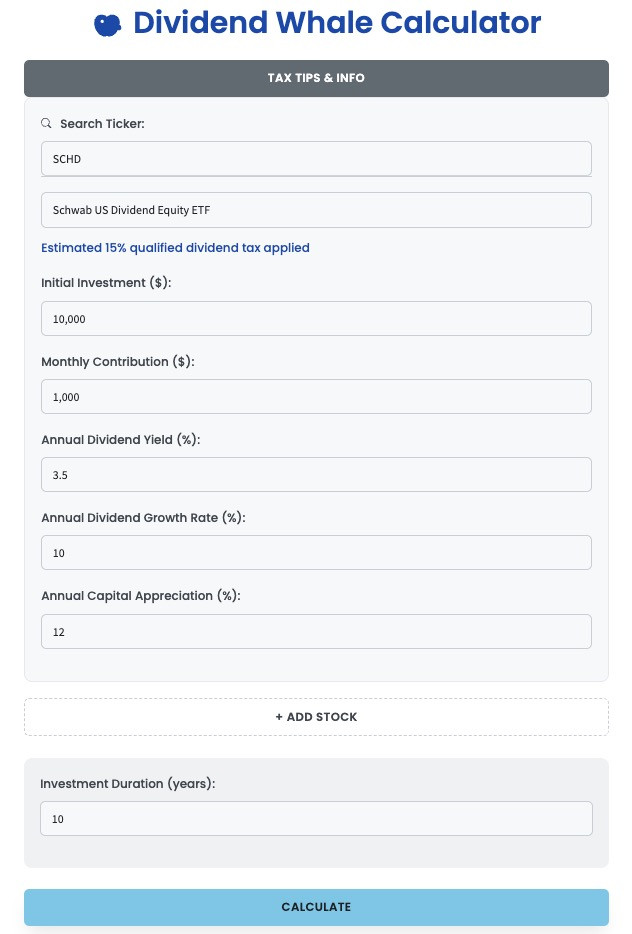
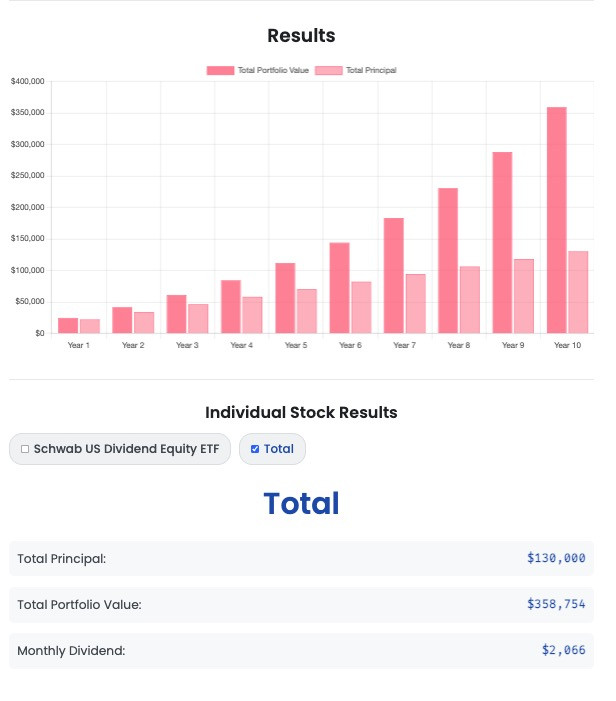
💰 Use Our Dividend Calculator to Project Your Roth IRA Growth
Before diving into the contribution limits, see how your Roth IRA dividends can compound tax-free over time. Our calculator shows you the exact monthly and annual income you can expect from dividend-paying investments inside your Roth IRA.
👇 Check it out now!
🐳 Dividend calculator📊 2026 Roth IRA Contribution Limits: What Changed?
The IRS announced inflation adjustments that significantly increase how much you can save in your Roth IRA for 2026. Here are the key numbers you need to know:
| Age Group | 2025 Limit | 2026 Limit | Increase |
|---|---|---|---|
| Under 50 | $7,000 | $7,500 | +$500 |
| 50 and Over | $8,000 | $8,600 | +$600 |
For investors under 50, the contribution limit increased by $500 to reach $7,500 annually. If you’re 50 or older, you benefit from an enhanced catch-up contribution, bringing your total annual limit to $8,600—a $600 increase from 2025.
These increases may seem modest, but they compound significantly over time. An extra $500 invested annually at a 7% return for 30 years adds up to approximately $47,000 in additional retirement savings. For those 50 and over contributing the extra $600, that figure grows even larger.
Important deadline: You have until April 15, 2027 to make your full 2026 contribution. This extended deadline gives you flexibility to maximize contributions even after the calendar year ends.
📈 Income Limits and Phase-Out Ranges for 2026
Not everyone can contribute the full amount to a Roth IRA. The IRS sets income limits that determine your eligibility, and these limits also increased for 2026. Here’s where you stand based on your Modified Adjusted Gross Income (MAGI):
| Filing Status | Full Contribution | Phase-Out Range | No Contribution |
|---|---|---|---|
| Single / Head of Household | Below $153,000 | $153,000 – $168,000 | Above $168,000 |
| Married Filing Jointly | Below $242,000 | $242,000 – $252,000 | Above $252,000 |
| Married Filing Separately | N/A | $0 – $10,000 | Above $10,000 |
What is MAGI? Your Modified Adjusted Gross Income is your adjusted gross income (AGI) with certain deductions added back. For most people, MAGI is very close to AGI. This number determines your Roth IRA eligibility.
If your income falls within the phase-out range, you can make a partial contribution. The exact amount you’re allowed to contribute decreases gradually as your income approaches the upper limit.
Example calculation: Sarah is single with a MAGI of $160,000 in 2026. Her income falls right in the middle of the phase-out range ($153,000-$168,000). She can contribute approximately half of the maximum limit, which would be around $3,750 instead of the full $7,500.
For high earners above the income limits, don’t worry—you still have options. The backdoor Roth IRA strategy (explained later) allows you to legally bypass these income restrictions.
🔍 Understanding Roth IRA Contributions vs Traditional IRA
Many investors wonder whether they should contribute to a Roth IRA or a traditional IRA. The fundamental difference lies in when you pay taxes:
Roth IRA (Tax-Free Growth): You contribute after-tax dollars now, but all withdrawals in retirement are completely tax-free, including decades of investment growth and dividends.
Traditional IRA (Tax Deduction Now): You may deduct contributions from your current taxes, but you’ll pay ordinary income tax on withdrawals in retirement.
For dividend investors, the Roth IRA structure is particularly powerful. Imagine holding dividend aristocrats like Johnson & Johnson or Coca-Cola for 30 years, collecting and reinvesting dividends that compound tax-free. In a taxable account, you’d pay taxes on those dividends every single year. In a Roth IRA, you keep 100% of your dividend income and never pay taxes on withdrawals after age 59½.
The compounding advantage: A $7,500 annual contribution earning 7% with 3% dividend yield over 30 years grows to approximately $740,000 in a Roth IRA. That entire amount—including $515,000 in growth—withdraws tax-free. In a taxable account, you’d pay taxes on dividends annually and capital gains taxes on withdrawal, potentially reducing your after-tax wealth by $150,000 or more.
📅 Key Dates and Contribution Deadlines for 2026
Timing matters when maximizing your Roth IRA contributions. Here’s your 2026 timeline:
January 1, 2026: Contribution period opens for tax year 2026. You can start making contributions immediately.
Throughout 2026: Make contributions anytime during the calendar year. Many investors set up automatic monthly contributions of $625 (for $7,500 limit) or $716 (for $8,600 limit).
December 31, 2026: Calendar year ends, but contribution window remains open.
January 1, 2027 – April 15, 2027: Extended contribution period for 2026. You can still make 2026 contributions during this window while simultaneously beginning your 2027 contributions.
April 15, 2027: Final deadline for 2026 contributions. After this date, you cannot make any more contributions for the 2026 tax year.
Strategic timing tip: While you have until April 2027 to contribute for 2026, investing earlier captures more time in the market. A $7,500 lump-sum contribution made on January 1 versus April 15 gains approximately 3.5 additional months of market exposure—potentially worth hundreds of dollars in extra returns over the long term.
⚠️ 3 Critical Risks You Must Understand
Risk 1: Excess Contribution Penalties
Contributing more than your allowed limit triggers a 6% excise tax on the excess amount every year until corrected. This penalty compounds annually if not addressed.
Example: If you accidentally contribute $8,000 when your limit is $7,500, you’ll owe 6% of $500 ($30) in penalties. If you don’t correct this, you’ll owe another $30 the following year, and every subsequent year.
How to fix it: Contact your IRA custodian immediately if you over-contribute. They can return the excess contribution and any earnings attributable to it before the tax filing deadline to avoid penalties.
Risk 2: Income Limit Miscalculations
Many investors miscalculate their MAGI and contribute when they’re actually over the income limit. This creates excess contributions subject to the 6% penalty.
Common mistake: Receiving an unexpected bonus, selling investments, or getting a large raise can push your income above the threshold mid-year.
Protection strategy: If you’re close to the income limits, consider contributing later in the year when you have better visibility into your annual income. Alternatively, use the backdoor Roth IRA strategy which has no income restrictions.
Risk 3: Early Withdrawal Complications
While Roth IRA contributions (not earnings) can be withdrawn tax-free and penalty-free at any time, withdrawing earnings before age 59½ typically triggers a 10% penalty plus income taxes, with limited exceptions.
The five-year rule: Even after age 59½, you must wait five years from your first Roth IRA contribution before withdrawing earnings tax-free. Plan accordingly if you’re starting your Roth IRA later in life.
💡 This Investment Strategy Works Best For These Investors
Young professionals (20s-30s): The Roth IRA is arguably the most powerful retirement vehicle available at this life stage. Decades of tax-free compounding turn modest contributions into substantial wealth. A 25-year-old contributing $7,500 annually until age 65 at 7% average returns accumulates approximately $1.6 million—completely tax-free.
Mid-career high earners: If your income approaches or exceeds the phase-out limits, utilize the backdoor Roth IRA strategy. This allows you to capture tax-free growth benefits regardless of your income level. Pair this with maxing out your 401(k) to accelerate wealth building.
Dividend income enthusiasts: Investors building dividend portfolios find the Roth IRA structure ideal. Dividends compound without annual tax drag, accelerating your path to financial independence. Holding high-yield dividend stocks or ETFs like SCHD, VYM, or individual dividend aristocrats becomes significantly more powerful in this tax-advantaged wrapper.
Pre-retirees (50s): The catch-up contribution provision ($8,600 limit) helps you accelerate savings in your peak earning years. If you started saving late, maximize Roth contributions now to build tax-free income streams for retirement.
Anyone expecting higher future tax rates: If you believe tax rates will increase (either from policy changes or your personal income growth), paying taxes now via Roth contributions and enjoying tax-free withdrawals later creates substantial savings.
❓ Frequently Asked Questions
Q1: Can I contribute to both a Roth IRA and Traditional IRA in 2026?
Yes, but your total combined contributions cannot exceed $7,500 (or $8,600 if age 50+). For example, you could contribute $4,000 to a Roth IRA and $3,500 to a Traditional IRA, but not $7,500 to each.
Q2: What if I don’t have earned income?
You must have earned income (wages, salary, self-employment income) at least equal to your contribution amount. Investment income, rental income, and Social Security don’t count. However, a working spouse can contribute for a non-working spouse through a spousal IRA.
Q3: How does the backdoor Roth IRA work for high earners?
High earners above the income limits can contribute to a non-deductible Traditional IRA (which has no income restrictions), then immediately convert it to a Roth IRA. This “backdoor” strategy bypasses income limits. Important: Watch for the pro-rata rule if you have existing Traditional IRA balances.
Q4: Can I contribute to both a 401(k) and Roth IRA?
Absolutely. The 401(k) and Roth IRA have completely separate contribution limits. For 2026, you can contribute up to $24,500 to your 401(k) (or $32,500 if age 50+) AND up to $7,500 to your Roth IRA (or $8,600 if age 50+), assuming you meet income requirements.
Q5: What investments should I hold in my Roth IRA?
Focus on your highest-growth and highest-tax-burden investments. Dividend stocks, REITs, and growth stocks all work excellently in Roth IRAs. The tax-free nature means you keep 100% of dividends and capital gains. Many investors use their Roth IRA for aggressive growth investments since the gains will never be taxed.
Advanced Strategies for Maximizing Your 2026 Contributions
Strategy 1: Front-load your contributions – Instead of spreading contributions throughout the year, invest your full $7,500 or $8,600 on January 1. Historical data shows time in the market beats timing the market, and front-loading captures maximum market exposure.
Strategy 2: Use tax refunds strategically – If you receive a tax refund in spring 2026, immediately apply it toward your Roth IRA contribution. This turns found money into long-term wealth without impacting your regular budget.
Strategy 3: Automate monthly contributions – Set up automatic transfers of approximately $625/month ($7,500 ÷ 12) or $716/month ($8,600 ÷ 12). Automation ensures consistency and removes the temptation to skip contributions. Dollar-cost averaging through regular contributions also smooths out market volatility.
Strategy 4: Mega backdoor Roth (for 401(k) participants) – If your employer’s 401(k) plan allows after-tax contributions and in-service distributions, you might be able to contribute significantly more than the standard Roth IRA limit. This advanced strategy can move up to $46,000 additional dollars into Roth accounts annually.
Strategy 5: Roth IRA ladder for early retirement – If you’re planning to retire before 59½, building a Roth conversion ladder allows penalty-free access to retirement funds. Convert Traditional IRA money to Roth IRA gradually, wait five years, then withdraw the conversion amounts tax and penalty-free.
Building Your Dividend Income Inside a Roth IRA
For readers of Dividend Whale’s blog, the Roth IRA structure offers unmatched advantages for dividend investing strategies. Here’s why this combination is so powerful:
Tax elimination on dividend income: In a taxable brokerage account, qualified dividends are taxed at 0%, 15%, or 20% depending on your income. Non-qualified dividends face ordinary income tax rates up to 37%. In a Roth IRA, all dividends—qualified or not—grow completely tax-free. Over decades, this tax savings compounds into enormous wealth.
Dividend reinvestment acceleration: When you reinvest dividends in a taxable account, you still owe taxes on those dividends, reducing the amount you can reinvest. In a Roth IRA, 100% of your dividends reinvest, creating powerful compounding. A 3% dividend yield reinvested tax-free versus after-tax can result in 20-30% more wealth over 30 years.
Freedom to rebalance without tax consequences: Want to sell a winning dividend stock and buy another? In taxable accounts, this triggers capital gains taxes. In your Roth IRA, you can rebalance, harvest gains, and shift strategies without any tax impact. This flexibility allows you to optimize your dividend portfolio continuously.
High-yield strategies become more attractive: Normally, high-yield dividend stocks or REITs create substantial annual tax burdens in taxable accounts. Inside a Roth IRA, you can pursue these higher-yielding opportunities without tax concerns. A 7% yielding investment produces the full 7% for reinvestment, not 5% after taxes.
Comparing Roth IRA to Other Retirement Accounts
Understanding how the Roth IRA fits into your overall retirement strategy requires comparing it to other tax-advantaged accounts:
| Feature | Roth IRA | Traditional IRA | 401(k) |
|---|---|---|---|
| 2026 Contribution Limit | $7,500 ($8,600 age 50+) | $7,500 ($8,600 age 50+) | $24,500 ($32,500 age 50+) |
| Tax Treatment | After-tax contributions, tax-free withdrawals | Pre-tax contributions, taxed withdrawals | Pre-tax (traditional) or after-tax (Roth 401k) |
| Income Limits | Yes ($168,000 single, $252,000 joint) | No income limits to contribute | No income limits |
The ideal strategy for most investors combines multiple account types: max out 401(k) employer match first (free money), then maximize Roth IRA contributions, then return to 401(k) to reach contribution limits, and finally consider taxable brokerage accounts for additional savings.
What Happens If You Exceed Income Limits Mid-Year?
Life brings unexpected financial changes—bonuses, commissions, stock compensation, or inheritances can suddenly push your income above Roth IRA limits. Here’s how to handle this situation:
Scenario: You contributed $7,500 to your Roth IRA in January 2026, expecting a $145,000 salary. In June, you receive an unexpected $30,000 bonus, pushing your MAGI to $175,000—above the $168,000 single filer limit.
Solution options:
Option 1 – Recharacterization: Contact your IRA custodian before your tax filing deadline and recharacterize your Roth IRA contribution as a Traditional IRA contribution instead. This treats the contribution as if it was always made to a Traditional IRA. You can then convert it to Roth via the backdoor method if desired.
Option 2 – Remove excess contribution: Withdraw the excess contribution plus any earnings before your tax filing deadline (including extensions). This avoids the 6% annual penalty. The earnings portion will be taxed and may incur a 10% early withdrawal penalty.
Option 3 – Carry forward: If you discover the excess contribution after the deadline, you can apply it to the following tax year (assuming you’re eligible that year and haven’t already contributed). However, you’ll owe the 6% penalty for the year(s) it was excess.
Prevention strategy: If your income is volatile or close to the limits, consider making your Roth IRA contribution later in the year (November-December) when you have better income visibility. Alternatively, use the backdoor Roth strategy from the beginning to avoid income limit concerns entirely.
Disclaimer
This article provides general information about Roth IRA contribution limits and strategies for educational purposes only. It is not personalized financial, tax, or investment advice. Tax laws are complex and change frequently. Individual circumstances vary significantly.
Before making any financial decisions, including Roth IRA contributions, conversions, or investment choices, consult with qualified professionals including a certified financial planner (CFP), certified public accountant (CPA), or tax attorney who can assess your specific situation.
The author and Wealth Trend Guide assume no liability for any financial decisions made based on information in this article. Past performance of investment strategies does not guarantee future results. All investing involves risk, including the potential loss of principal.
References and Further Reading
For additional information about 2026 Roth IRA limits and retirement planning, the following authoritative sources provide detailed guidance:
- Vanguard – Roth IRA Income and Contribution Limits for 2026
- Charles Schwab – Roth IRA Contribution Limits for 2025-2026
- IRS – Retirement Topics – IRA Contribution Limits
- IRS – 401(k) limit increases to $24,500 for 2026, IRA limit increases to $7,500
These resources are updated annually and provide the most current information directly from financial institutions and the Internal Revenue Service.